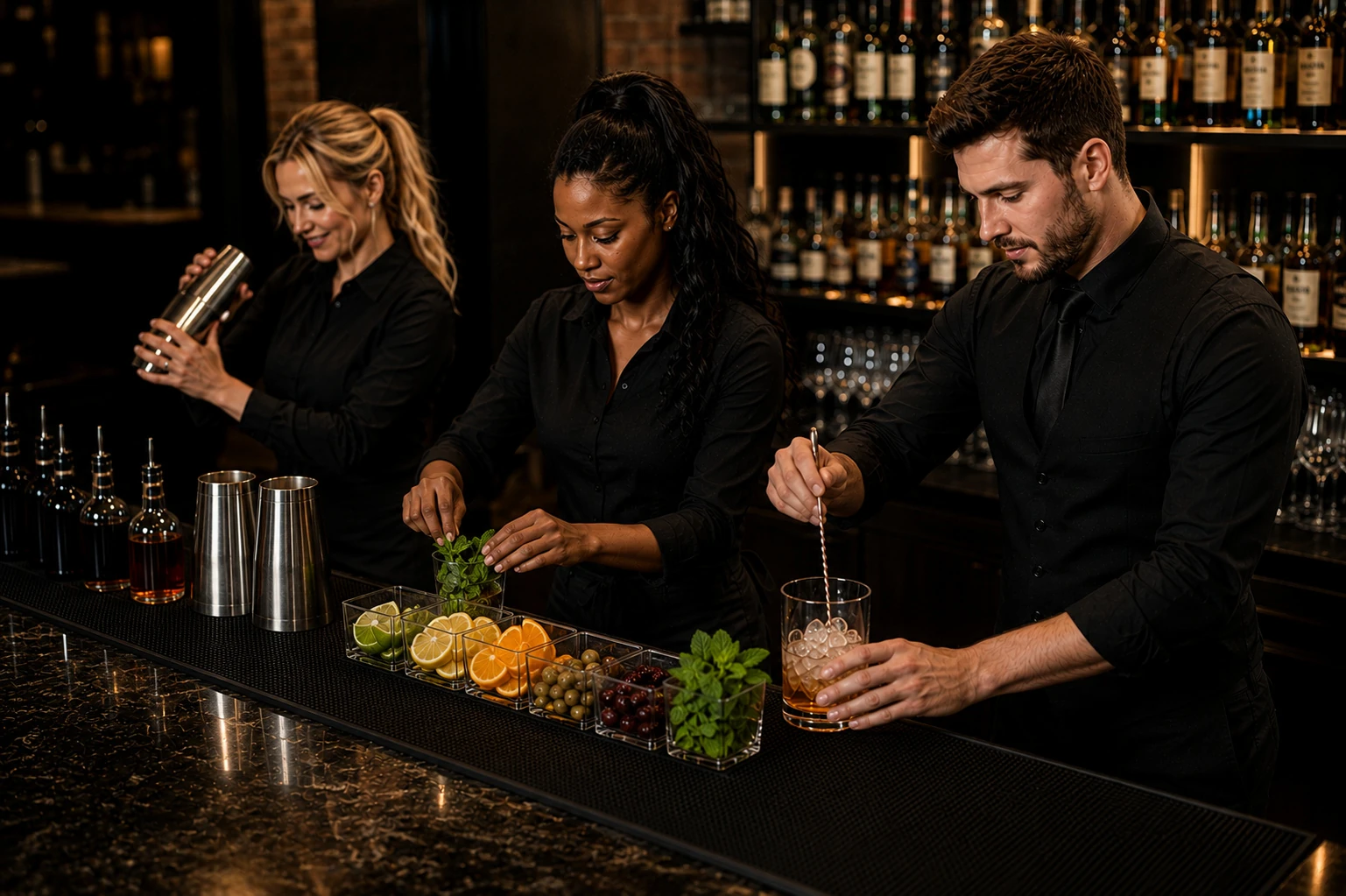
Choosing the right number of bartenders is one of the most important decisions in planning a wedding bar. Too few bartenders can create long lines, rushed service and frustrated guests. Too many may increase cost without improving the experience. The right number depends on more than the guest count: the menu, venue, bar layout, service schedule and level of preparation all matter.
Start with your guest count—but do not stop there
A practical starting range is approximately one bartender for every 50 to 75 guests when the bar serves beer, wine and a limited selection of simple mixed drinks. A cocktail-focused menu, multiple bar stations or a large arrival rush may require a stronger ratio. A smaller event may still need two bartenders if guests arrive at the same time and the bar is expected to open immediately.
Consider the type of bar service
Beer and wine service
A beer-and-wine bar is usually faster because drinks require fewer steps. One bartender may handle a moderate guest count if beverages are chilled, glassware is ready and the bar is properly stocked.
Standard mixed drinks
Adding highballs, basic cocktails and garnishes increases preparation time. Guests may also ask more questions or request substitutions. Additional bar support helps maintain speed and consistency.
Signature cocktails
Signature drinks can improve the guest experience, but they should be designed for efficient event service. Cocktails that require muddling, several ingredients or elaborate garnishes can slow the line. Pre-batching permitted ingredients and preparing garnishes in advance may reduce pressure on the bar team.
Identify peak service periods
Wedding bars rarely operate at a steady pace. The heaviest demand often occurs immediately after the ceremony, at the start of cocktail hour, after dinner and when dancing begins. A staffing plan should be built around those peaks rather than the quietest part of the evening.
- Cocktail hour: many guests may approach the bar within a short window.
- Dinner: demand may slow, allowing the team to restock and reset.
- Speeches and formalities: service expectations should be coordinated with the planner.
- Dancing: demand can increase again, especially for mixed drinks and water.
Bar layout can change the answer
A beautiful bar is not always an efficient bar. Bartenders need enough workspace, ice, glassware, waste handling, water and access to backup stock. If your venue requires two separate bars, each station needs appropriate coverage. One bartender cannot effectively serve two rooms even when the total guest count appears manageable.
Do you need a barback?
A barback keeps ice, glassware, beverages and garnishes moving. For larger weddings, a barback can be more valuable than simply adding another bartender because it allows bartenders to remain guest-facing. Barbacks also support cleanup, empty-container removal and restocking during busy periods.
Information to give your staffing provider
- Estimated guest count and number of guests under legal drinking age
- Bar menu and signature cocktail details
- Number and location of bar stations
- Service start and end times
- Whether glassware, ice, mixers and garnishes are provided
- Venue restrictions and last-call requirements
- Expected setup and breakdown responsibilities
A simple planning example
For a 120-guest wedding with one main bar, beer, wine, highballs and two efficient signature cocktails, two bartenders plus one barback may provide stronger service than two bartenders working without support. For a 60-guest private wedding serving only beer and wine, one experienced bartender may be sufficient if the bar is prepared and guest arrivals are staggered.
Final recommendation
Plan for the busiest fifteen minutes of your wedding, not the average hour. The best staffing decision comes from matching guest count with menu complexity, bar layout and service timing. Bartonica can review these details and help you build a practical wedding bar team for events across Toronto and the Greater Toronto Area.