Corporate events represent a company in front of employees, clients, partners and invited guests. The staffing plan should support more than food and beverage service—it should reinforce punctuality, brand presentation, guest flow and professional communication.
Define the event format
Start by identifying the type of corporate event. Conferences, networking receptions, awards dinners, holiday parties, product launches and board events have different operational needs. A daytime conference may require early setup and continuous coffee service, while an evening reception may need bartenders, coat check and high-volume clearing.
Core staffing roles
Registration and guest welcome
Although not every staffing provider supplies registration personnel, someone must manage arrivals, name badges, directional questions and VIP expectations. Hospitality staff should know who is responsible for each function.
Servers and bussers
Servers support food and beverage service, while bussers keep tables, meeting rooms and reception spaces organized. For all-day programs, dedicated room refreshes can prevent service areas from becoming cluttered.
Bartenders and barbacks
Corporate bars should operate efficiently and professionally. A clear menu, organized stations and barback support can help control lines during the transition from formal programming to networking.
Coat check attendants
Coat check can be essential for winter events in Toronto. Arrival and departure periods should be staffed for peak demand, especially when a program ends at a fixed time.
Kitchen support
Dishwashers and prep cooks help protect service flow behind the scenes. Off-site venues and temporary kitchens may need additional support because storage, dish handling and waste routes are less efficient.
Build the staffing plan around the agenda
The event agenda determines where pressure will occur. Registration may be busiest in the first thirty minutes. Coffee breaks can create sudden demand at several stations. A reception bar may be quiet during speeches and crowded immediately afterward. Share the detailed agenda with the staffing provider, including vendor access, guest arrival, meal service, formal remarks and teardown deadlines.
Maintain brand standards
Corporate event staff should receive a concise briefing covering dress code, terminology, VIP information, photography restrictions, accessibility considerations and escalation procedures. Staff do not need confidential business information, but they do need enough context to communicate confidently.
Questions for the venue and caterer
- Which staff are already included in the venue or catering agreement?
- Who manages room setup, resets and teardown?
- Who supplies coffee stations, bars, glassware and service equipment?
- Are security, registration and audiovisual teams separate?
- What are the loading, elevator and parking procedures?
- When must the venue be fully cleared?
Plan for transitions
The most visible problems often happen between program stages. Examples include moving guests from a conference room to a reception, resetting a room during a break or opening several bars at once. Assign staff to transitions rather than assuming the same team can be everywhere simultaneously.
Use a central point of contact
A lead server, supervisor or event manager should communicate with the client representative, venue and catering lead. This avoids conflicting instructions and gives staff a clear escalation path when the schedule changes.
Corporate event staffing checklist
- Final guest count and attendance pattern
- Detailed run of show
- Floor plan and service routes
- Dress code and grooming expectations
- VIP and accessibility notes
- Food and beverage service plan
- Bar opening, last call and closing time
- Setup and teardown responsibilities
- Emergency and escalation contacts
Final recommendation
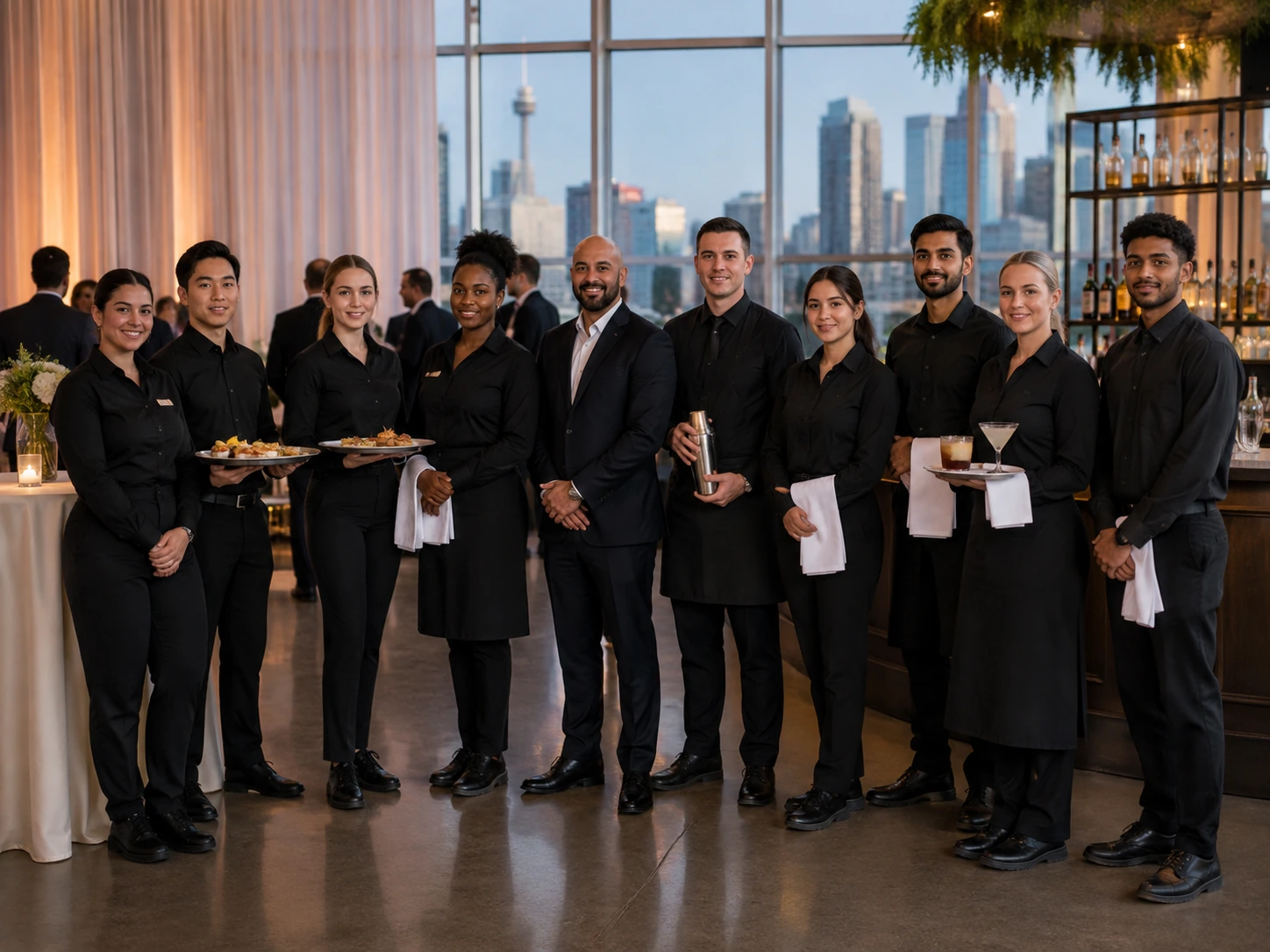
Book staffing early enough to review the agenda and responsibilities before the event day. A professional team should understand not only what to do, but when and why each task matters. Bartonica supports corporate events across Toronto and the GTA with hospitality staff selected around the event’s format and service requirements.