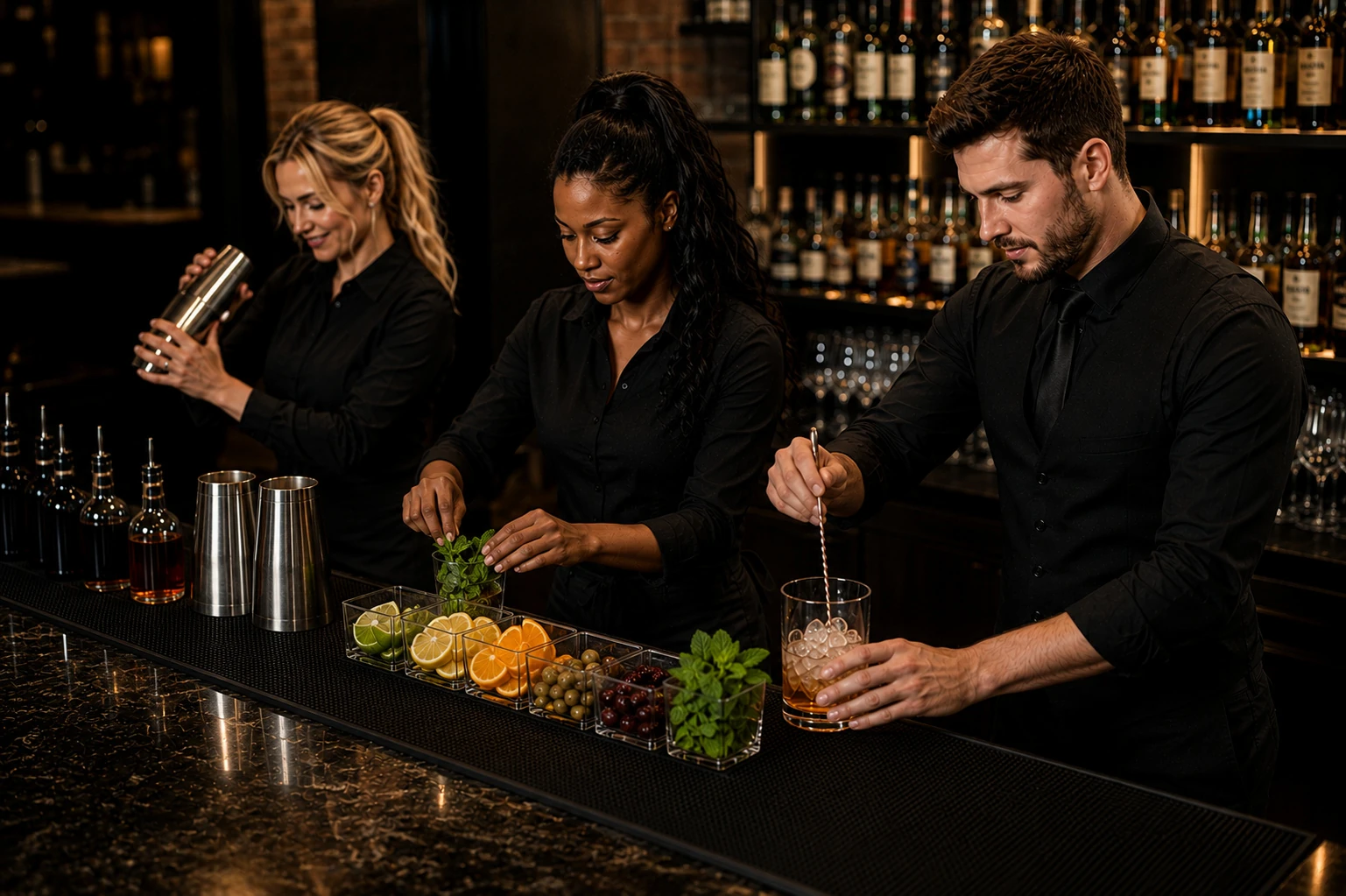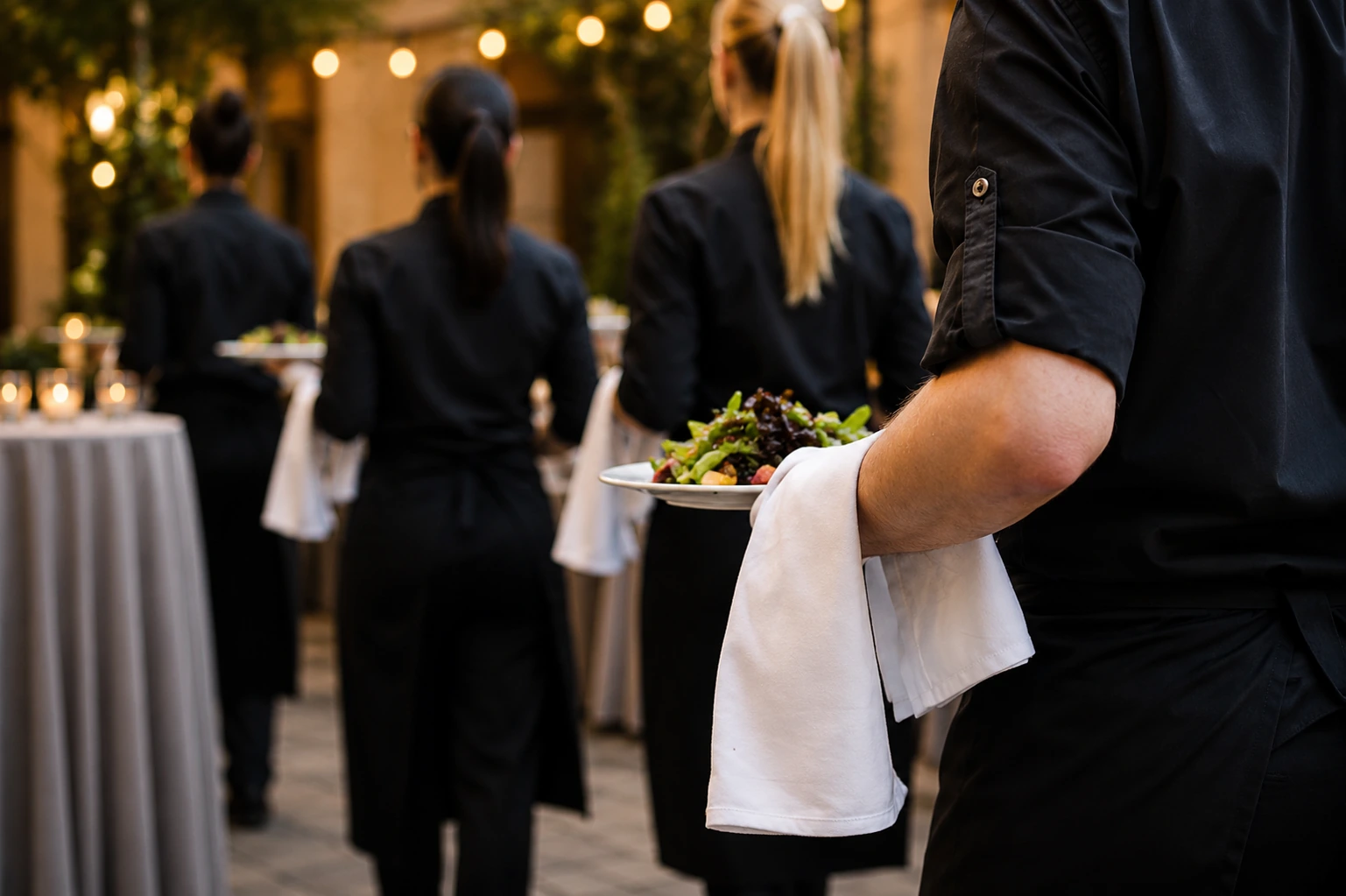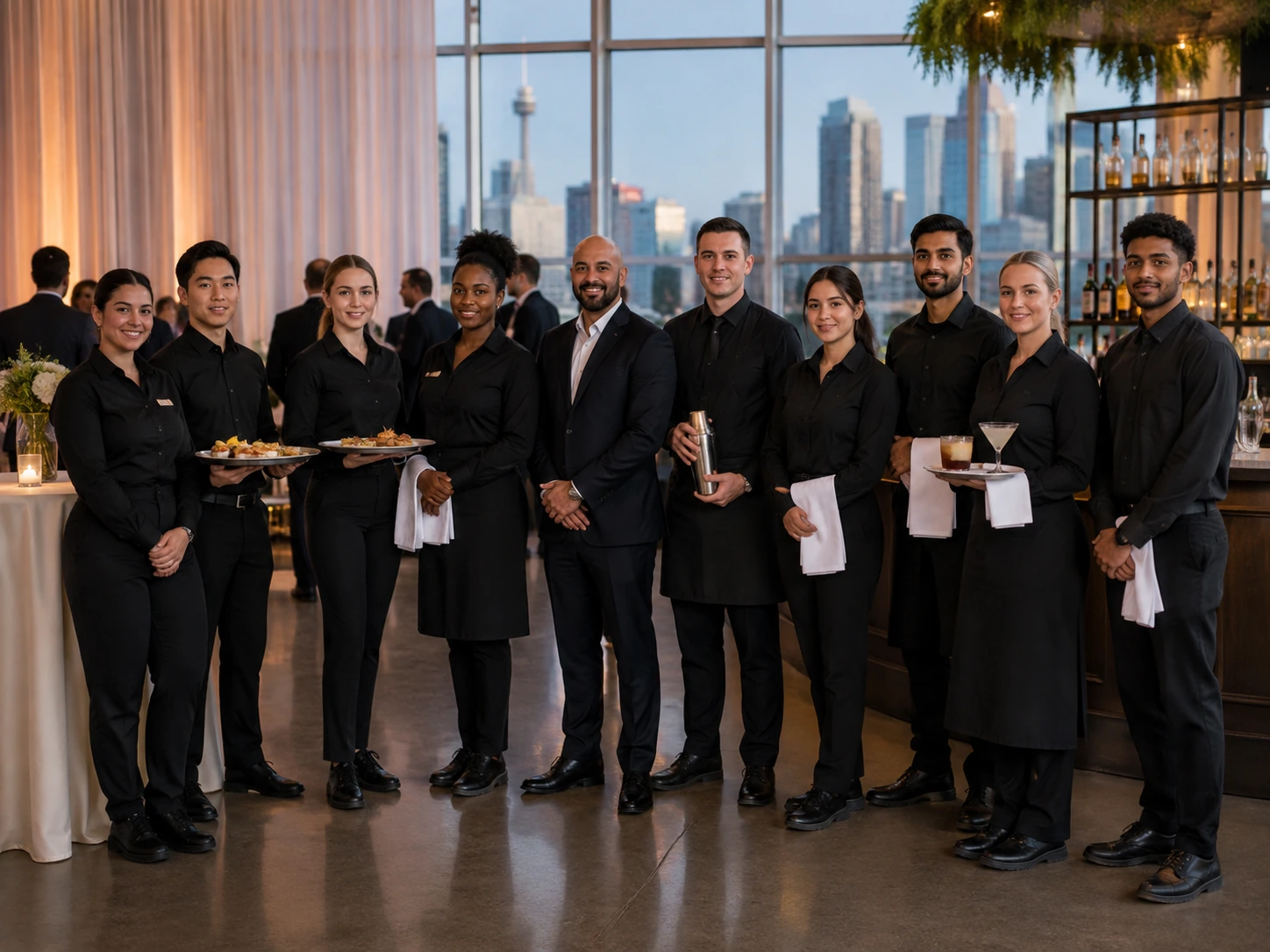
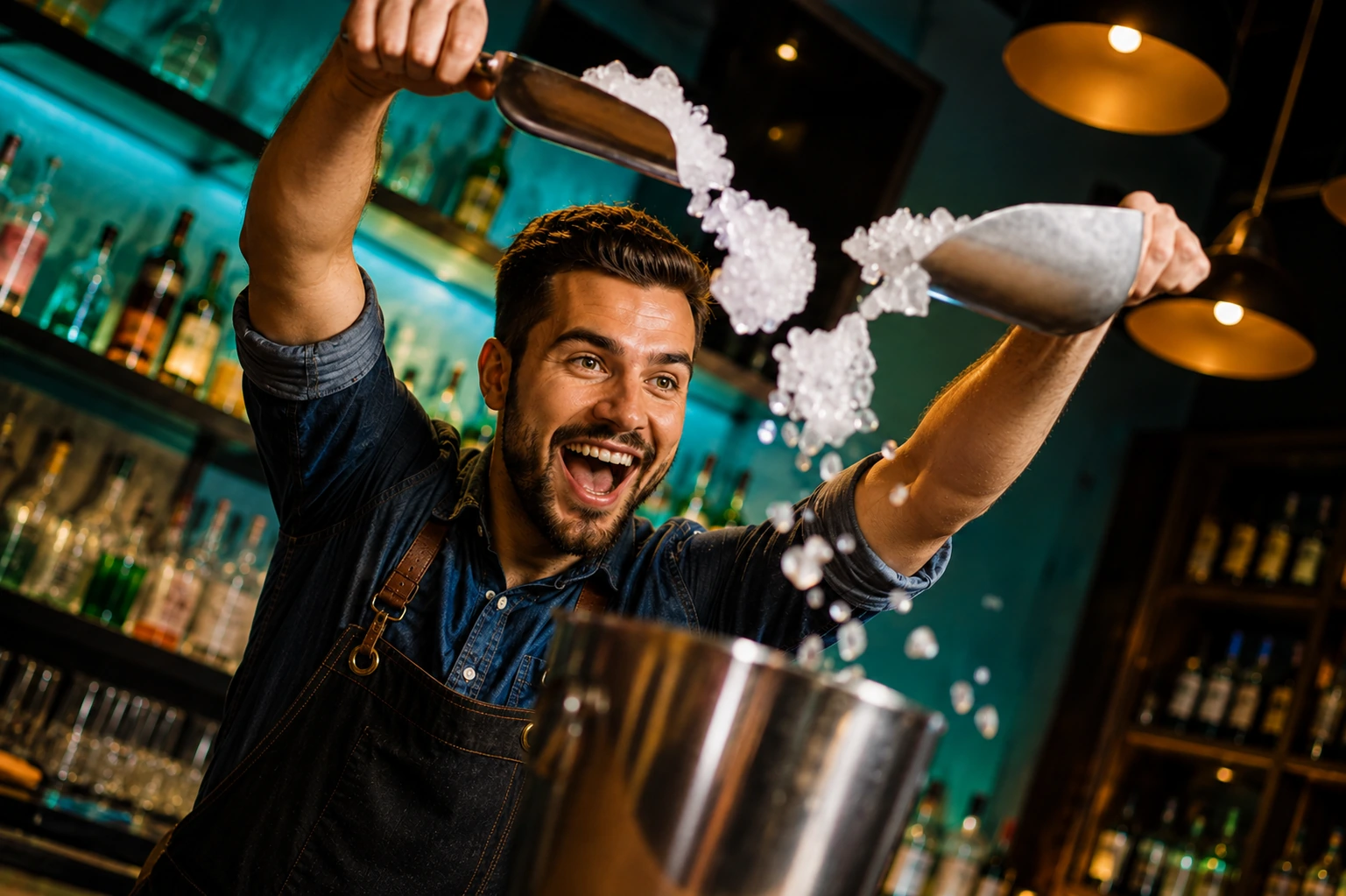
A professional event bartender does much more than pour drinks. The role combines preparation, organization, beverage knowledge, guest communication, cleanliness and coordination with the wider event team.
Before the event
Review the service plan
The bartender should understand guest count, menu, bar hours, signature cocktails, venue rules and what supplies are provided. Clear information prevents missing equipment and unrealistic expectations.
Set up the bar
Setup may include organizing spirits, wine, beer, mixers, ice, garnishes, glassware, tools, napkins and waste containers. Frequently used items should be positioned for efficient service.
Check quantities and readiness
Bartenders identify shortages, chill beverages, prepare garnishes and confirm that water and non-alcoholic options are available. When permitted and appropriate, certain cocktail components may be prepared in advance.
During service
Prepare beverages consistently
Professional bartenders follow the agreed menu and recipes. Consistent portions, garnish and presentation help control inventory and maintain quality.
Communicate with guests
Guests may ask about ingredients, non-alcoholic alternatives or recommendations. A professional bartender responds clearly and maintains a welcoming tone even during busy periods.
Manage the service pace
Bartenders prioritize orders, keep the station organized and communicate with barbacks or supervisors. Efficient movement is important, but speed should not replace accuracy and professional judgment.
Maintain cleanliness
Used tools, spills, empty containers and glassware can quickly affect the appearance and safety of a bar. Continuous cleaning keeps the station guest-ready and reduces end-of-night work.
Support responsible service
Event bartenders should follow applicable laws, venue policies and the host’s service plan. They may communicate concerns to the event lead or venue representative when necessary.
After service
- Close the bar according to the agreed time
- Organize remaining beverages and supplies
- Separate rentals, waste and recyclable materials
- Clean tools, surfaces and service areas
- Report shortages, breakage or relevant incidents
- Assist with inventory or packing when included in the scope
What bartenders usually need from the host
Responsibilities vary by booking. Confirm who supplies alcohol, permits, mixers, ice, fruit, glassware, tools, coolers, tables and waste removal. A bartender should not arrive to discover that essential equipment was assumed but never assigned.
Bartender versus barback
The bartender focuses on guest service and beverage preparation. The barback supports ice, stock, glassware, cleanup and replenishment. At larger events, the combination improves service more than asking bartenders to leave the bar repeatedly.
Qualities of a professional event bartender
- Punctual and prepared
- Organized under pressure
- Clear and respectful communication
- Strong awareness of cleanliness and safety
- Comfortable working with planners, caterers and venue teams
- Able to adapt when the event timeline changes
Final recommendation
When hiring a bartender, ask what is included in setup, service and cleanup. Share the complete menu and venue details before the event. Bartonica provides professional event bartenders and bar support for weddings, corporate functions and private events across Toronto and the GTA.